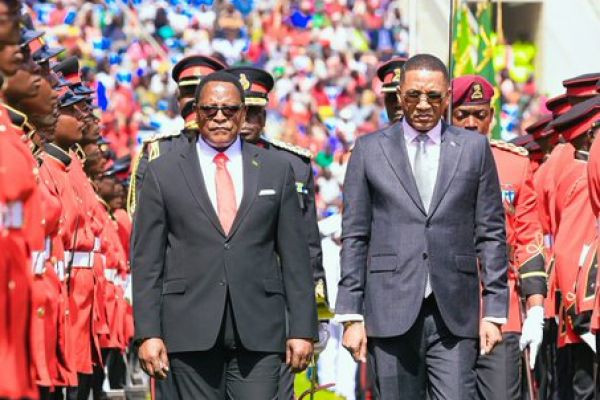
President Duma Boko’s recent, sweeping claim that 90% of media reports are “fake” has sparked alarm across Botswana, threatening to erode public trust in journalism and opening the door to harsh criticism and mockery of reporters from citizens and social media alike, according to a detailed Intelwatch report. For decades, Botswana has been hailed as a steady beacon of democracy and stability in Africa. But now, the country stands at a pivotal crossroads as mounting pressures threaten to choke it
04/28/26 • 19 Views

President Duma Boko’s recent, sweeping claim that 90% of media reports are “fake” has sparked alarm across Botswana, threatening to erode public trust in journalism and opening the door to harsh criticism and mockery of reporters from citizens and social media alike, according to a detailed Intelwatch report.
For decades, Botswana has been hailed as a steady beacon of democracy and stability in Africa. But now, the country stands at a pivotal crossroads as mounting pressures threaten to choke its once-vibrant media landscape.
The November 2024 political shift, which ended almost six decades of Botswana Democratic Party (BDP) dominance, seemed at first a fresh start. Yet a new study, “A Democracy at the Crossroads,” penned by Mmapula Molapong and published by the Southern-based research and advocacy group Intelwatch, paints a far more troubling picture: Botswana is veering dangerously close to what the report calls “information authoritarianism.”
Intelwatch, a rising voice committed to strengthening public oversight of intelligence agencies in the Global South, offers in this report a rigorous, evidence-driven analysis of the threats suffocating press freedom in Botswana. Its goal is clear: to arm policymakers, journalists, civil society, media owners, and citizens with a deep understanding of the forces at play, and what’s at stake.
“The analysis covers both traditional and digital media platforms, exploring the experiences of journalists, editors, media owners, and media advocacy organizations,” the report states. It exposes a media ecosystem under siege, grappling with everything from draconian laws and arbitrary enforcement to economic strangulation, online abuse, and coordinated disinformation campaigns. Botswana’s struggles are also placed within the wider context of Southern Africa’s media landscape, offering a sobering regional perspective.
A particularly chilling revelation is the rise of a “Digital Panopticon,” where sophisticated foreign surveillance tech is deployed by the state to monitor journalists and unearth confidential sources. The Directorate of Intelligence and Security (DIS) has reportedly employed Israeli-developed Cellebrite and Circles surveillance software to extract every bit of data from seized mobile phones.
The report recalls harrowing cases: the 2019 confiscation of devices from Mmegi journalist Tsaone Basimanebotlhe and the 2020 arrest of Oratile Dikologang, whose private messages and social media data were mined using forensic tools. “These technologies represent a profound threat to journalistic source protection, the twin foundations upon which investigative journalism depends,” the report warns.
Though President Boko’s rise initially sparked hope, that optimism has since dimmed. His recent charge that 90% of Botswana’s media reports are fake, media advocates argue, unfairly brands journalists as dishonest and emboldens security forces to act without accountability.
Beyond rhetoric, the government clings to colonial-era laws, sedition and criminal defamation, that remain potent weapons against independent media. “Journalists still face the threat of up to seven years’ imprisonment for reports deemed to excite disaffection against the government,” the report notes grimly.
Economic pressure compounds these legal threats. The government, as Botswana’s largest advertiser, has been accused of selectively withholding ads to punish critical outlets. Meanwhile, wealthy elites have turned to Strategic Lawsuits Against Public Participation (SLAPPs) to drain media resources. One striking example is a P100 million lawsuit against Mmegi by a multinational retailer, a case aimed not at justice but to “frustrate, milk, and run [media houses] dry.”
Source: https://weekendpost.co.bw/botswana-faces-press-freedom-crisis-warns-new-report/
Related Articles