Deadly Egypt train collision prompts calls for political accountability A deadly train collision in al-Ayyat that killed seven people has triggered demands for political accountability and rail upgrade reviews. A deadly train collision in the outskirts of the Egyptian capital Cairo, which killed at least seven people and injured more than 125 others according to the country’s Ministry of Health and Population, has ignited a wave of parliamentary and political demands for accountability. The disa
11/10/26 • 23 Visualizzazioni

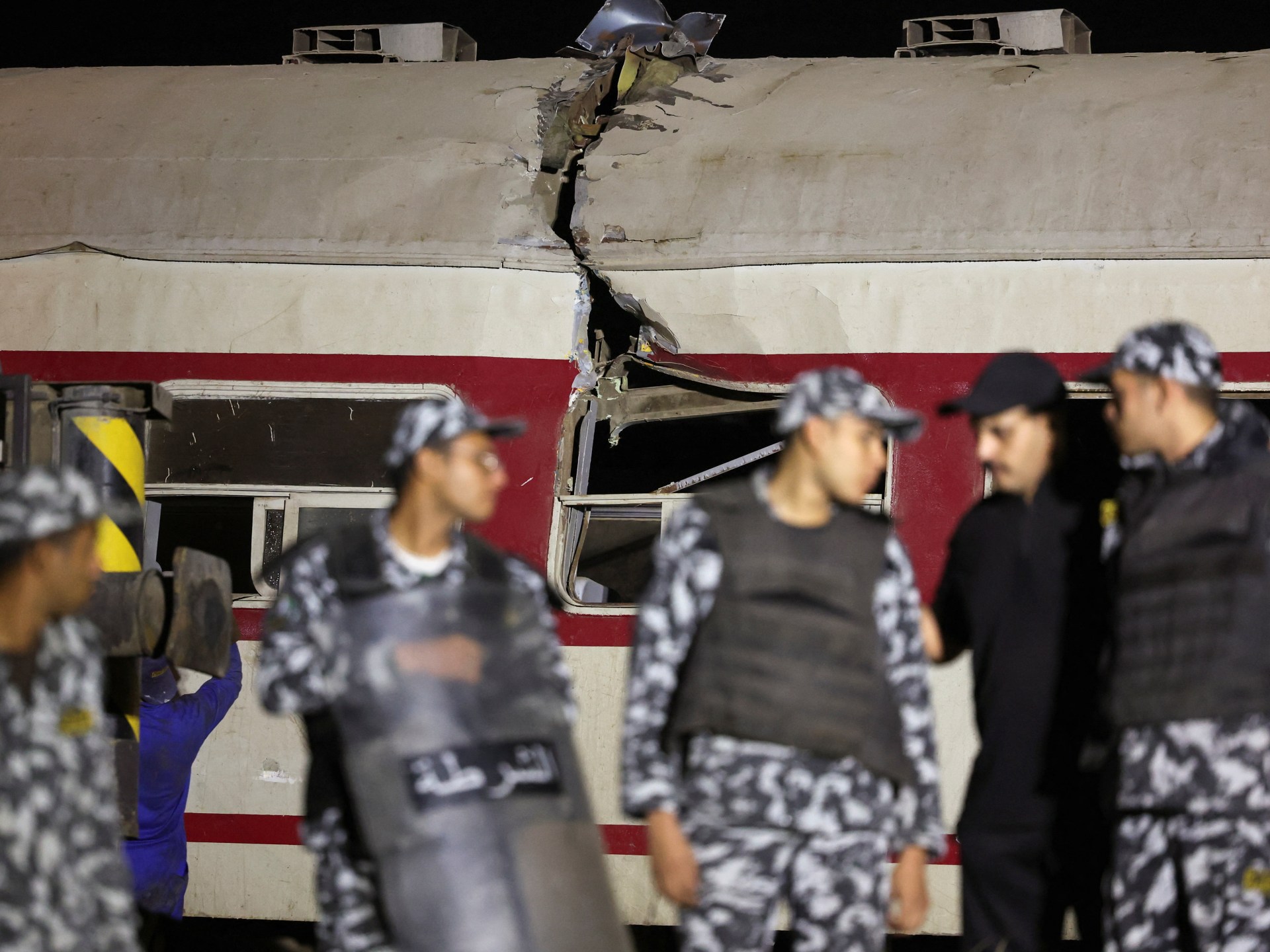
A deadly train collision in al-Ayyat that killed seven people has triggered demands for political accountability and rail upgrade reviews.
A deadly train collision in the outskirts of the Egyptian capital Cairo, which killed at least seven people and injured more than 125 others according to the country’s Ministry of Health and Population, has ignited a wave of parliamentary and political demands for accountability. The disaster raises urgent questions about the effect of the millions of dollars the Egyptian state has poured into upgrading the railway network and whether those investments are genuinely improving passenger safety.
A train travelling between Giza and Fayoum on Sunday ran into the back of another train on the Cairo-to-Aswan route, causing the latter to derail onto a countryside road in al-Ayyat district. Following the crash, President Abdel Fattah el-Sisi directed authorities to conduct an urgent investigation to “hold accountable anyone found to have been negligent”.
The Egyptian parliament’s Transport and Communications Committee summoned Transport Minister Kamel el-Wazir to an emergency session on Tuesday to investigate. Meanwhile, opposition voices have escalated demands for political accountability, ranging from criticising the minister to demanding the dismissal of the entire government.
Abdel Moneim Imam, a member of Parliament and head of the Justice Party, told Al Jazeera that the situation requires decisive action, and highlighted several previous train disasters in al-Ayyat. A 2002 fire killed more than 370 people, while a train collision in 2009 killed 15 people, and three separate collisions in 2016 killed 14 people in total.
Al-Ayyat is a major corridor for trains travelling between Cairo and southern Egypt, with heavy railway traffic and railway switches in the area.
“The recurrence of train accidents in the al-Ayyat area, despite what the Transport Ministry has repeatedly announced regarding the development of the railway system, reflects the absence of genuine accountability for the officials responsible for those accidents,” Imam stated.
“Taking decisive measures and holding officials accountable for previous accidents would have prevented the recurrence of these scenes,” he added. “The minister of transport enjoys the protection of the parliamentary majority, which prevents the activation of parliamentary accountability … The continued turning of a blind eye to the shortcomings and the recurrence of accidents without genuine accountability leads to the continuation of the crisis.”
Imam, who has described himself as a reformist politician, called for ministers to be questioned in Parliament over the latest accident.
Egypt’s parliamentary transport committee met on Tuesday in the presence of Transport Minister Kamal el-Wazir to discuss the circumstances of Sunday’s train collision, and measures to prevent similar accidents.
articoli Correlati